


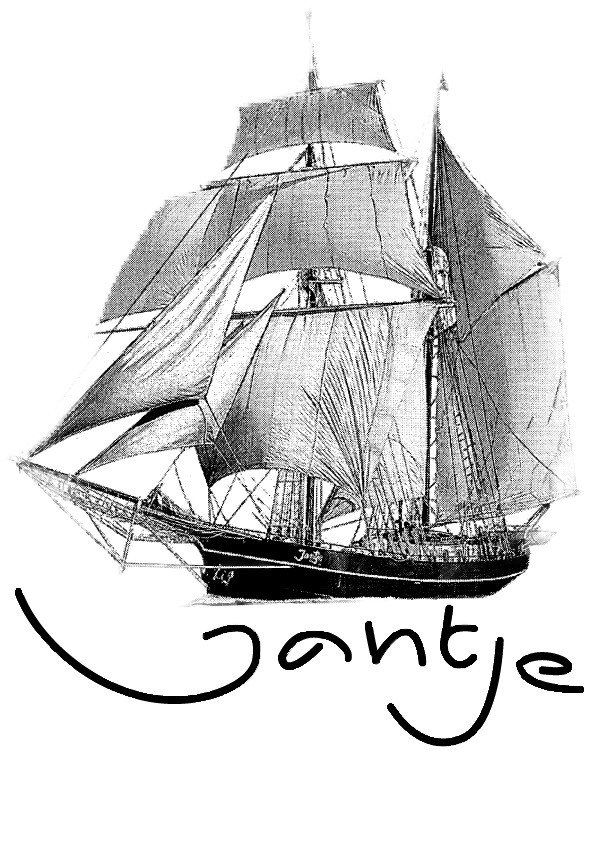
From
De Twee Gebroeders to
Jantje
The ‘Jantje’ entered service as a fishing cutter on 17 April 1930.
It was the first steel vessel owned by a Texel fisherman, who moved to Den Helder with his family in 1917. In 1930, he had the future Jantje built at a shipyard in Monnickendam. The ship was christened “De Twee Gebroeders” after the skipper’s two sons. When built, it was roughly the same size as the Jantje was before its 2019 extension (16.45m by 5.90m); it also had masts, although they were much shorter than the current ones. Using an otter trawl, father, son and a deckhand fished for plaice, sole and cod. At the time, people did not yet have much confidence in diesel engines, and the cutter could still be sailed. After eight years of fishing, in 1938 the 75/90 hp ABC engine was replaced by a 120 hp Industrie diesel engine (4-stroke, 3-cylinder), and the rigging was removed.
In February 1940, “De Twee Gebroeders” became trapped in one-and-a-half-metre-thick drifting pack ice. Off Callantsoog, its propeller broke, leaving the ship adrift and in danger of being carried into the minefields. A tug from Nieuwendiep brought it back to Den Helder.
| Year | Name | Owner |
|---|---|---|
| 1930 - 1947 | HD 25 Twee Gebroeders | R.N. Bakker, Den Helder |
| 1947 - 1952 | HD 25 Ennie en Appie | J. Bakker, Den Helder |
| 1952 - 1956 | UK 105 Elly Marie | K. Ras, Urk |
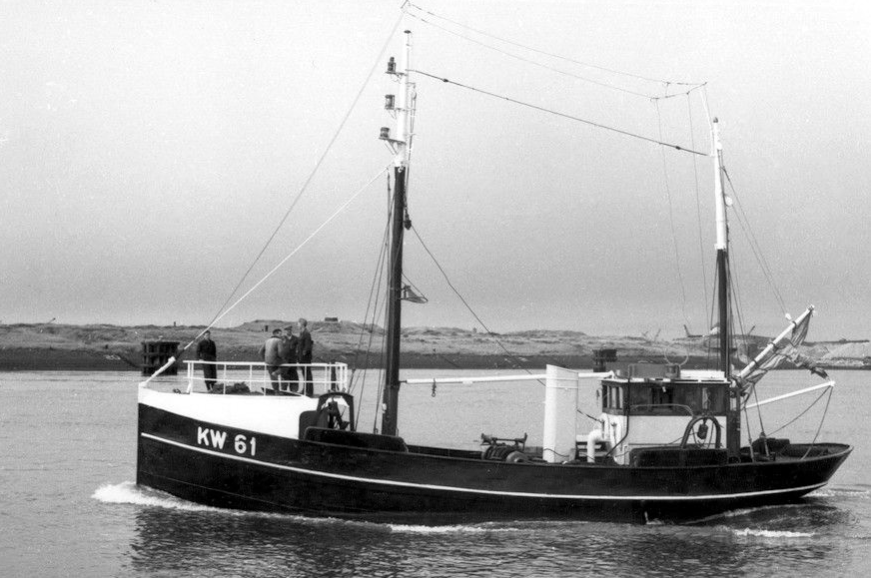
| 1956 - 1960 | KW 61 Gijsbertha | P. Varkevisser, Katwijk |
| 1960 - 1965 | KW 61 Ludi | Fa. Van Duijvenvoorde, Katwijk |
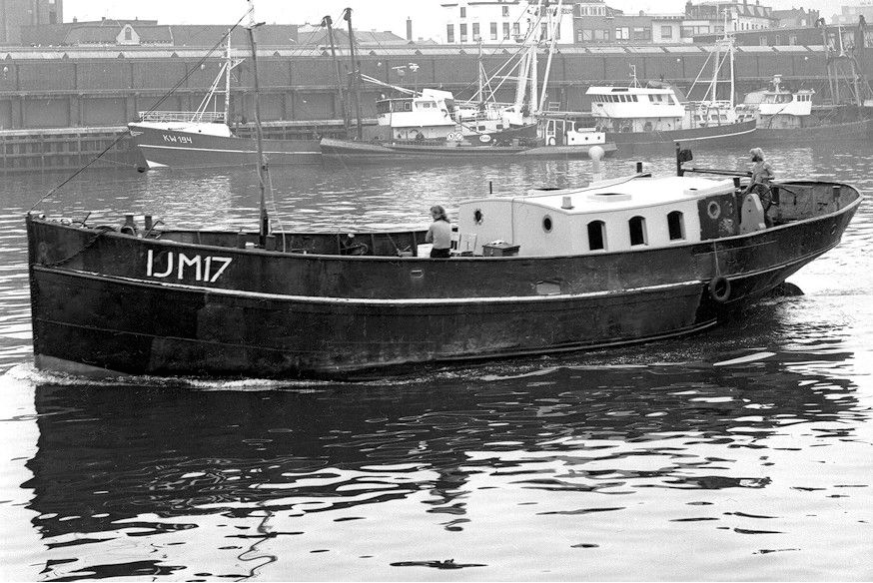
| 1965 - 1973 | YM 17 Jeanette | C. Drijver & J.G. de Vries, IJmuiden |
| 1973 - 1977 | WR 110 Carla Marijke | H.B. Westerwal & P.J. v Dijk, Den Oever |
| 1977 | Removed from the fishing register | |
| 1977 - 1985 | Conversion to a schooner brig | Harry and Marian Müter, IJmuiden |
| 1985 - 2005 | Jantje | Harry and Marian Müter, IJmuiden |
| 2005-present | Jantje | Marten Munstra & Erik Kuiper |